

The VX One Hybrid Keel: Skiff-Like Excitement Meets Keelboat Confidence
What if you could have the adrenaline of a centreboard-like skiff and the reassurance of a keelboat, all in one?
The VX One’s hybrid keel makes this possible: it provides the agility and responsiveness of a centerboard setup, plus the ballast-driven stability of a true keelboat. That means you get high-performance fun that’s also easy to control, whether you’re racing competitively or blasting around with friends and family.
How Does the Hybrid Keel Achieve This?
The VX One’s hybrid keel gives you much greater righting moment than a typical centerboard boat. This is due primarily to the keel’s weight including the lead bulb which weighs all up 176Ibs (80kg’s).
In simple terms righting moment is the rotational force that helps the boat return upright after wind and waves heel it, so greater righting moment generally means a more stable platform.
The Hybrid Keel’s Many Benefits
The hybrid keel comes with many benefits which can make the VX One so accessible for sailors.
- Greater righting moment for stability and control
- Greater Righting Moment: Less Crew Needed
- Shallow-ish draft (1.32 m / 4 ft 4 in) for versatile sailing waters
- Durable build: anodised aluminium fin and lead bulb
- Simple, stowable hoist/lower system
- Flexible launching; hoist or beach trolley
- Easy trailering with the keel up
Let’s look at each benefit in detail.
Greater Righting Moment: More Stability, More Control
The VX One’s hull and rig are designed to deliver a high-performance experience. When combined with the weighted keel, it helps make that “high-performance thrill” easier to manage as it steadies the boat.
Greater Righting Moment: Less Crew Needed
Greater righting moment also allows a wider combined crew-weight range. With class rules requiring at least two crew (and most teams sailing with two or three), the VX One doesn’t rely on extra weight to stay upright. That gives you more flexibility, whether you’re racing light or taking family on a fast reach.
Shallow Draft = More Places to Sail
With the keel down, the VX One draws 1.32 m (4 ft 4 in) which is shorter than many comparable sportboats. That makes it a strong option for venues where shallow water, ramps, or tidal constraints can limit deeper-keel designs.
Built for longevity: Corrosion and Abrasion Resistance
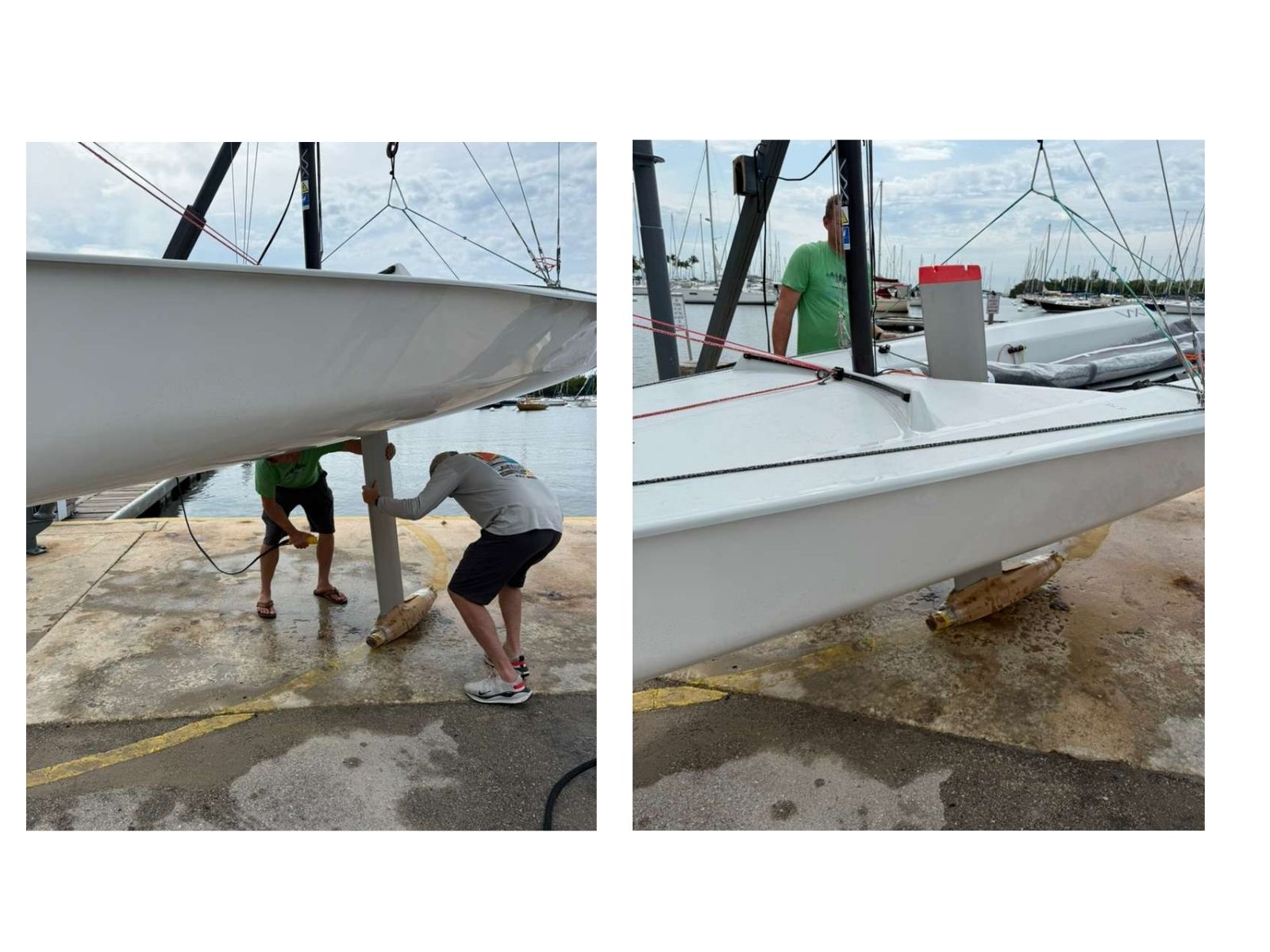
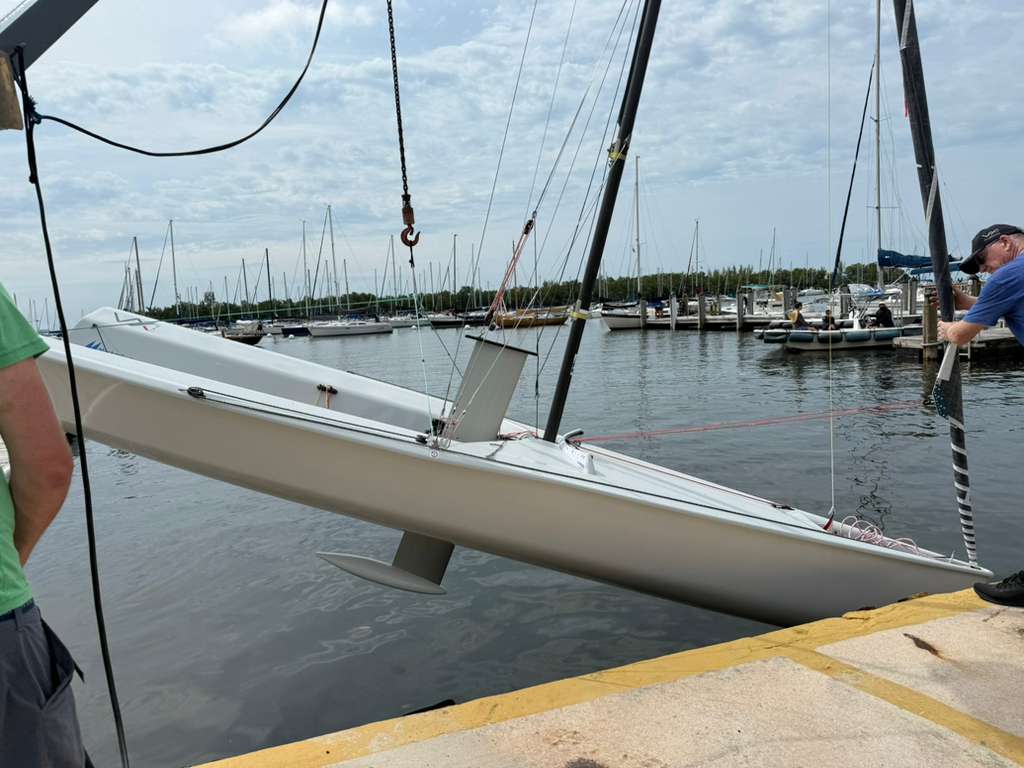
The hybrid keel features an anodised extruded aluminium fin and a lead bulb, weighing in at 176 lb (80 kg). These material choices are designed to resist corrosion and abrasion while delivering excellent structural hardness.
Simple Hoist and Lower System
Lowering and hoisting the keel is handled with the VX One purchase system (supplied with the boat). The system runs from the rigging point at the spreader and attaches to the top of the keel plate. Once the keel is set, the purchase system can be stowed away in the rigging bag.
Flexible Launching: Hoist or Beach Trolley
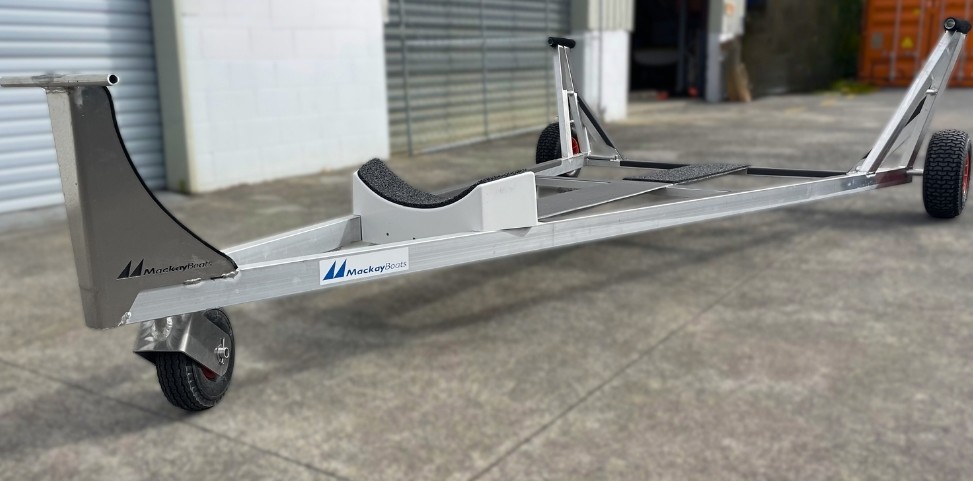
Unlike keelboats that demand a crane, the VX One’s hybrid keel allows you to launch from a beach trolley as well as a hoist.The trolley is engineered not only for balance but to support the boat with its hybrid keel, using a padded support arm for the bulb during launching and retrieval.
Trailerable Convenience
With the keel up, the VX One sits comfortably on its trailer, with the bulb resting on a padded arm. Towing is simple, and fleets often transport two boats together for regattas or group travel.
Straightforward Installation
Initial installation takes some care to ensure the keel aligns correctly with the case. Once aligned, you typically won’t need to deal with installation again and in most instances the boat arrives with the keel already fitted into the case.
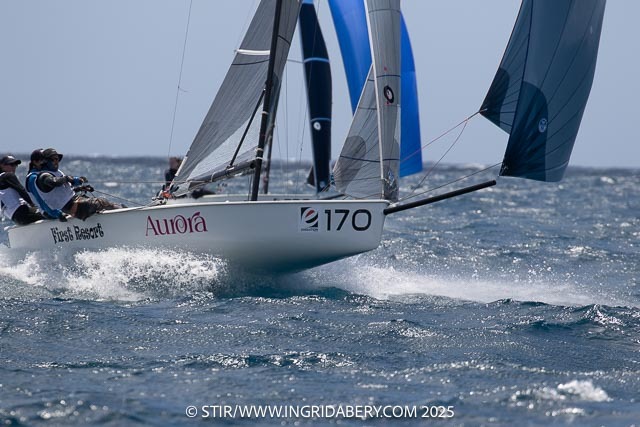
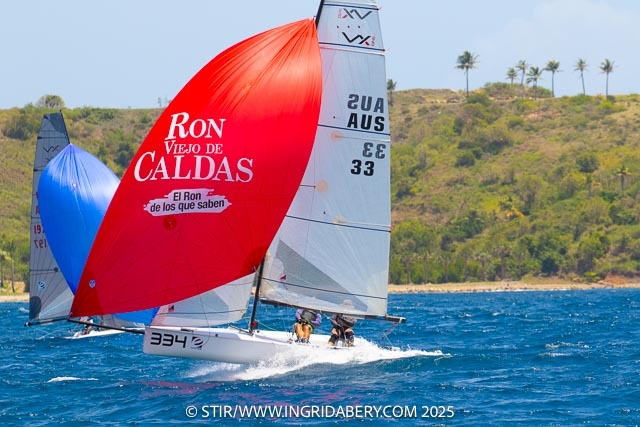
Comparison: Hybrid Keel vs. Centerboard vs. Fixed Keel: What’s Different?
- On-the-water feel: Hybrid keel = skiff-like agility with keelboat stability; centerboard = high performance, but more reliant on crew technique; fixed keel = stable, but often less responsive.
- Righting moment: Hybrid offers improved stability/control over centerboard; fixed keel is stable but may lack agility.
- Crew weight flexibility: Hybrid supports a wide crew range; centerboard boats depend more on crew weight; fixed keels are generally less sensitive to crew weight.
- Draft/access: VX One’s 1.32 m suits many venues; centerboard varies; fixed keels often have deeper drafts.
- Launching: Hybrid keel launches by hoist or trolley; centerboards often launch from ramps; fixed keels usually require cranes.
- Trailering: Hybrid and centerboard boats are easy to trailer; fixed keels can be more complex.
Ready to try it for yourself?
Contact your nearest VX One dealer or local fleet to book a demo sail—there’s no substitute for feeling the hybrid keel difference firsthand.
Photo credits: STIR/ingridabery.com 2025, Naomi Sterlingdsdottir